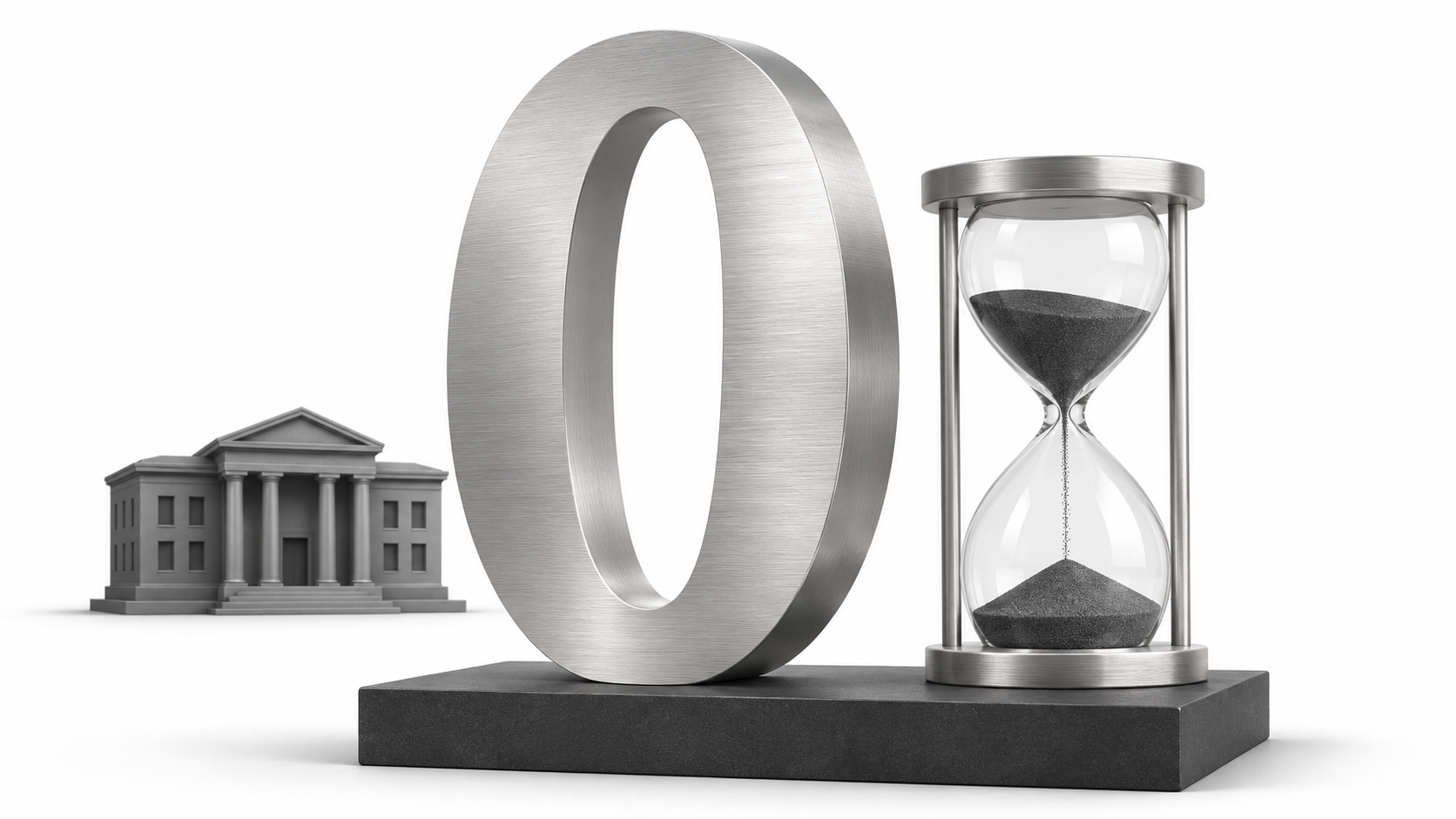
The Swiss National Bank maintained its policy rate at 0 per cent, in line with expectations, while inflation remains low and economic growth forecasts have strengthened for 2026. A weaker Swiss franc has shifted market discussion away from potential negative rates toward speculation about future rate increases.
Swiss banks offer differing views: ZKB anticipates possible gradual increases from 2027, UBS expects two hikes in early-to-mid 2027 with markets already pricing this in, and Raiffeisen remains more cautious, citing moderate inflationary pressure. Overall, analysts suggest Switzerland may exit zero interest rates without entering a high-rate environment, a nuanced shift relevant to investors and businesses.
The Swiss National Bank has kept its policy rate at 0 per cent. That came as no surprise. What is more interesting is what is changing behind that unchanged rate.
Inflation stood at 0.8 per cent in August. The SNB now expects inflation of 0.7 per cent in 2026 and 0.8 per cent in both 2027 and 2028. At the same time, the Swiss economy is proving stronger than expected. For 2026, the National Bank forecasts growth of between 1.5 and 2 per cent.
There is another factor that matters almost as much to the SNB as inflation: the Swiss franc has weakened.
That changes the debate.
Just a few months ago, the discussion centred on whether Switzerland might return to negative interest rates. Banks are now increasingly considering the opposite question: when might the SNB start raising rates again?
ZKB still sees no need for action in 2026. However, it argues that the combination of stronger growth, a weaker franc and greater inflation risks has shifted the balance. A window for higher interest rates could open in 2027. In today’s market commentary, ZKB is cited as suggesting possible gradual increases from March 2027.
UBS also now sees interest rates heading higher. It expects two increases, in March and June 2027. What is notable, however, is the second part of its analysis: a substantial part of this shift is already priced into capital markets.
Raiffeisen takes a more cautious view. Underlying inflationary pressure remains moderate, and the SNB can afford to wait. Yet its assessment also acknowledges that markets now expect a move away from zero interest rates next year.
What can we conclude from this?
Not that interest rates necessarily have to rise immediately.
But that the direction of the debate has changed.
Switzerland remains a country with low interest rates. The SNB itself continues to forecast price stability, and its inflation forecast is in fact based on the policy rate remaining unchanged at 0 per cent throughout the forecast period.
But the one-sided debate of recent years is gradually fading. Negative interest rates are no longer the dominant scenario. At the same time, a return to significantly higher interest rates is not the baseline scenario either.
What is perhaps the most intriguing scenario therefore lies somewhere in between:
Switzerland could leave the era of zero interest rates behind without leaving the era of low interest rates.
For companies and investors, this distinction matters more than it might initially seem.
Because capital markets do not wait for the SNB’s next decision. They start pricing it in beforehand.
Sources:
SNB – Monetary policy assessment of 24 September 2026
https://www.snb.ch/de/publications/communication/press-releases-restricted/pre_20260924
ZKB – Interest rate and economic forecasts
https://www.zkb.ch/de/private/hypotheken-immobilien/rechner-hilfsmittel/prognosen.html
ZKB – Swiss GDP and interest rate forecasts
https://www.zkb.ch/de/private/blog/private/anlegen/markt-trends/wir-erhoehen-die-schweizer-bip-prognosen.html
UBS – Global rise in interest rates: Implications for Swiss investors and mortgages
https://www.ubs.com/global/en/wealthmanagement/insights/marketnews/article.3784639.html
UBS – Current interest rate forecast for Switzerland
https://www.ubs.com/ch/de/services/mortgages-and-financing/mortgages/interest-rates.html
Raiffeisen – Interest rate trends and assessment of the SNB
https://www.raiffeisen.ch/rch/de/wissen/wohnen/zinsentwicklung.html
SRF/AWP – Economists’ reactions to the SNB’s decision
https://www.srf.ch/news/wirtschaft/geldpolitische-lage-snb-belaesst-leitzins-bei-null-prozent